What contractor insurance in Kentucky actually covers
If you run a construction or contracting business in Kentucky, contractor insurance is not optional paperwork. It is the financial foundation that keeps a bad day on the job from becoming a business-ending event. One slip, one fire, one dispute over a finished project, and the costs can hit six figures before you have time to call a lawyer. The right coverage keeps you working instead of paying out of pocket.
This post breaks down the policies that matter most for Kentucky contractors, what the state requires, and how to build a coverage package that fits your actual risk, whether you are a solo electrician in Shepherdsville, a framing crew in Mount Washington, or a general contractor pulling permits across the Louisville metro.
Kentucky contractor licensing and insurance requirements
Kentucky does not have a single statewide general contractor license, but the state and local jurisdictions do impose real insurance requirements that you cannot ignore.
- Workers compensation: Kentucky law requires any employer with one or more employees to carry workers compensation coverage. There is no minimum payroll threshold. If you have a helper on your crew, you need the policy. The Kentucky Labor Cabinet enforces this, and fines for non-compliance are steep.
- General liability for permits: Most Kentucky counties and cities, including Jefferson County and Bullitt County, require proof of general liability insurance before they will issue a building permit. Minimums vary by jurisdiction, but $500,000 to $1,000,000 per occurrence is common.
- Specialty trade licenses: Electricians, plumbers, HVAC technicians, and other trades must hold state-issued licenses and typically must show proof of insurance as part of the application.
Beyond compliance, your clients will ask for a certificate of insurance before they hand you a key or sign a contract. Showing up without one costs you jobs.
Core policies every Kentucky contractor needs
General liability insurance
This is the starting point for every contracting business. General liability insurance covers third-party bodily injury and property damage that happens because of your work, your crew, or your business operations. If a subcontractor damages a homeowner's flooring, or a client trips over your equipment, this policy responds. Most contractors in Kentucky carry at least $1,000,000 per occurrence and $2,000,000 aggregate. Larger commercial jobs often require higher limits.
Workers compensation
As noted above, Kentucky requires it the moment you hire anyone. Beyond the legal mandate, workers compensation protects your business from wage-replacement and medical claims if an employee is injured on the job. Construction ranks among the highest-risk industries for workplace injuries, and Kentucky's workers comp system is no-fault, meaning an injured worker does not have to prove negligence to collect benefits. That is good for your employees, and having the coverage keeps the claim off your personal balance sheet.
Commercial auto insurance
Your personal auto policy does not cover a vehicle used for business purposes, and it almost certainly does not cover the truck pulling a trailer full of tools. Commercial auto insurance covers vehicles owned by your business, and it can extend to rented or borrowed vehicles through hired and non-owned auto coverage. If you or your crew drive to job sites, this coverage is not optional.
Inland marine insurance (tools and equipment)
The name sounds strange for a landlocked state, but inland marine insurance is the standard way to cover tools, equipment, and materials while they are in transit or on a job site. Theft from job sites is a common problem across the Louisville region and surrounding counties. A standard commercial property policy covers what is at your fixed business location. Inland marine covers your gear everywhere else it goes.
Additional coverage worth serious consideration
Builders risk insurance
If you are working on new construction or a major renovation, builders risk insurance covers the structure itself while it is under construction. It pays for damage from fire, wind, lightning, vandalism, and other covered causes before the project is complete and before the owner's homeowners or commercial property policy takes effect. It is typically purchased per project, and the cost is modest relative to the exposure. Kentucky storms, including the severe weather that moves through the Ohio Valley, make this coverage worth carrying.
Commercial umbrella
A serious job site injury or a large-scale property damage claim can exhaust your general liability limits quickly. A commercial umbrella policy sits on top of your underlying liability policies and extends your limits, usually in increments of $1,000,000. For contractors working on larger commercial projects or in environments with greater public exposure, umbrella coverage is a relatively affordable way to add a buffer. Our blog post on whether you really need umbrella insurance covers the math in more detail.
Professional liability (errors and omissions)
If your business involves design-build work, project management, or professional consulting alongside hands-on construction, professional liability insurance protects you from claims that your advice, plans, or specifications caused financial harm. General liability does not cover this gap. Design-build contractors and construction managers in particular need to look closely at this coverage.
Surety bonds
Bonds are not insurance in the traditional sense, but they are often required alongside your insurance. A surety bond guarantees to a project owner or a government entity that you will complete the work as contracted. If you default, the surety steps in. License and permit bonds are common requirements for Kentucky contractors across multiple trade categories.
Kentucky-specific risks that shape your coverage needs
Kentucky's geography and climate create exposures that contractors here deal with regularly.
- Severe weather: Kentucky sits in a corridor that sees significant tornado and straight-line wind activity, especially in spring. For contractors with materials or partially completed structures on site, builders risk coverage is worth carrying year-round. For those with outdoor equipment, inland marine matters just as much.
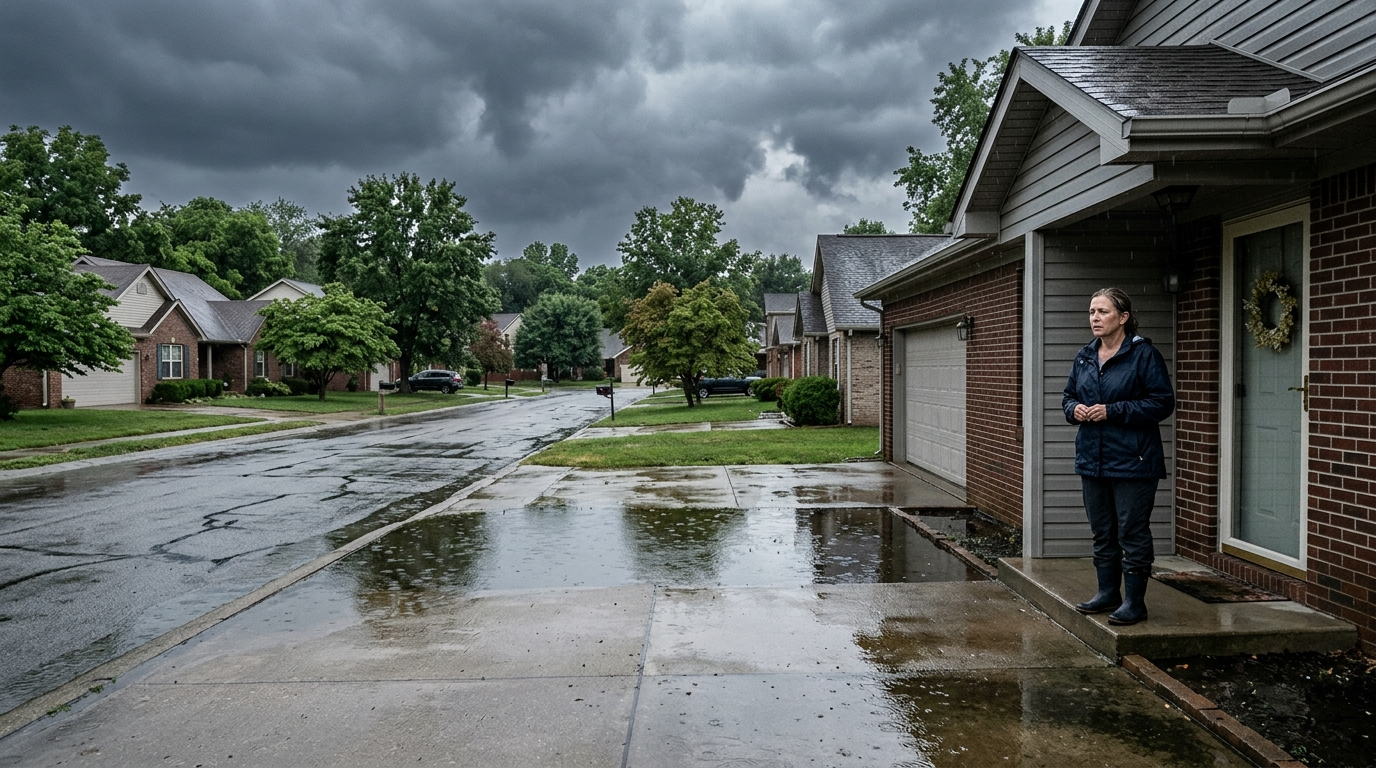
- Flooding: The Louisville metro and surrounding counties along the Ohio River and its tributaries have well-documented flood exposure. Standard commercial policies do not cover flood damage. Contractors storing equipment in low-lying areas or working on flood-prone sites should evaluate commercial flood insurance separately.
- Subcontractor management: Kentucky's residential and commercial construction market relies heavily on subcontractors. If a subcontractor you hire does not carry their own insurance, your policy may absorb their claims. Requiring certificates of insurance from every sub is basic risk management, and some carriers require it to maintain your rates.
- Growing suburban markets: Communities like Mount Washington, Shepherdsville, and Bullitt County are seeing substantial residential and commercial development. More projects mean more exposure. Coverage limits that made sense two years ago may be undersized for where your business is today.
How much does contractor insurance cost in Kentucky?
Cost varies significantly based on your trade, your payroll, your claims history, and the specific coverages you carry. Here are realistic ballpark figures to give you context:
- General liability: A small sole-proprietor contractor in a lower-risk trade (painting, finish carpentry) might pay $800 to $1,500 per year . A roofing or structural concrete contractor with crews and higher receipts could pay $5,000 or more annually .
- Workers compensation: Kentucky workers comp rates are set per $100 of payroll and vary by class code. Roofing rates can run $15 to $30 per $100 of payroll . Office-only staff rates are a fraction of that. Experience modifiers move the number up or down based on your claims history.
- Commercial auto: A single work truck typically runs $1,200 to $2,000 per year depending on the driver record and usage. A fleet of vehicles adds up fast.
- Inland marine: A small tools floater for a solo contractor might run $300 to $600 per year for $25,000 to $50,000 in coverage.
The right number is the one an independent agent gets for you after shopping your account across multiple carriers, not the first quote from a single company's website. Rates for the same contractor can vary by 30 to 50 percent between carriers depending on how each one underwrites your trade and your claims history.
Work with Clear Choice Insurance for contractor coverage in Kentucky
Clear Choice Insurance is an independent insurance agency serving contractors and construction businesses across the Louisville area, Bullitt County, Shepherdsville, Mount Washington, and the surrounding communities. As an independent agency, we are not tied to a single carrier. We compare options across multiple insurers to find coverage that fits your trade, your crew size, and your budget.
Our contractor insurance page outlines the full picture of what we offer for construction businesses. Whether you are just starting out and need a basic general liability policy, or you are managing a growing commercial operation and need a full package with umbrella limits and bonds, we can help you build the right program.
Call us at (502) 251-3500 or get a quote online to start the conversation. There is no pressure and no obligation. Just straight answers from people who understand what contractors in Kentucky actually face on the job.